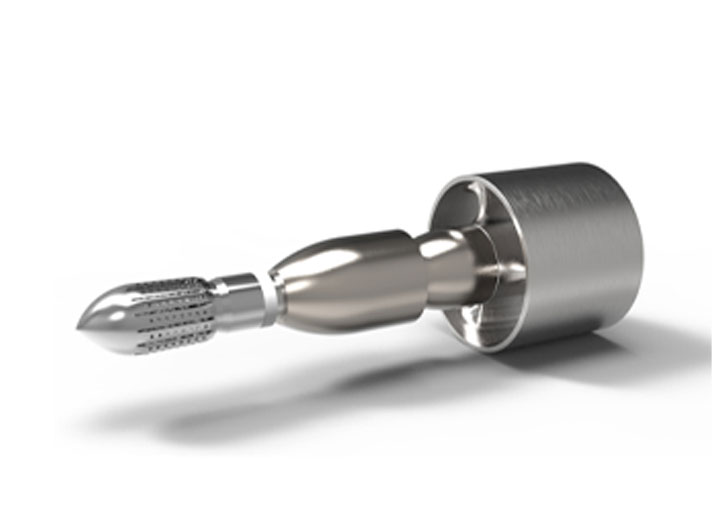


Customize to Meet Your Needs
BWG provides tailored solutions for the oil and gas drilling industry, ensuring your specific technical and operational requirements are fully met.

High-Temperature Components
Utilization of wide-bandgap semiconductors (e.g., SiC, GaN) or silicon-on-insulator (SOI) technology for ICs capable of withstanding temperatures exceeding 225°C.
Optimized selection of high-temperature capacitors (ceramic or tantalum), resistors (thick-film/thin-film), and magnetic components (ferrite-based materials).
Product Details
High-temperature downhole electronics represent the core electronic systems in oil and gas logging, logging-while-drilling (LWD)/measurement-while-drilling (MWD), and downhole tools, specifically designed for extreme high-pressure high-temperature (HPHT) environments. These systems must operate reliably for extended periods in downhole conditions ranging from 175°C to 200°C (and even up to 250°C). The primary technical challenges include semiconductor performance degradation, thermal expansion mismatch of materials, insulation failure, and signal drift caused by high temperatures.
Key Technical Features
High-Temperature Components
Utilization of wide-bandgap semiconductors (e.g., SiC, GaN) or silicon-on-insulator (SOI) technology for ICs capable of withstanding temperatures exceeding 225°C.
Optimized selection of high-temperature capacitors (ceramic or tantalum), resistors (thick-film/thin-film), and magnetic components (ferrite-based materials).
Thermal Management Design
Passive Cooling: Heat dissipation through high-thermal-conductivity materials (e.g., aluminum nitride ceramics, heat pipes).
Active Cooling: Some systems integrate micro thermoelectric coolers (TEC) or insulated chambers (e.g., vacuum-sealed enclosures).
Reliability Enhancement
High-Temperature Packaging: Use of gold-based solder, high-temperature epoxy resins, and metal-sealed housings (e.g., Inconel 718).
Signal Compensation: Temperature drift suppression algorithms (e.g., real-time calibration based on PT100 sensors).
Power Supply & Communication
Power provided by high-temperature lithium batteries (e.g., Li-SOCl₂) or downhole turbine generators.
High-frequency signals transmitted via high-temperature coaxial cables or fiber optics to avoid ohmic losses in conventional copper wiring.
Typical Applications
LWD: Signal processing circuits for high-temperature resistivity/gamma logging tools.
Intelligent Downhole Completions: High-temperature electric valve control systems and sensor networks.
Ultra-Deep Well Exploration: Long-term monitoring modules for geothermal and ultra-HPHT oil & gas wells.
Industry Standards & Challenges
Compliance with API 19G (HPHT tool specifications) and IEC 61508 (functional safety standards).
Current technological bottlenecks include the commercialization of ICs operable above 200°C and the control of long-term failure rates.
This technology critically impacts the reliability and data accuracy of downhole tools, serving as a key enabler for deep oil & gas and geothermal resource development.
Customize to Meet Your Needs
BWG provides tailored solutions for the oil and gas drilling industry, ensuring your specific technical and operational requirements are fully met.